Exploring RTP Thresholds and Bonus Activation Rates in Regional European Slot Designs
Petra Butler · Jun 3, 2026
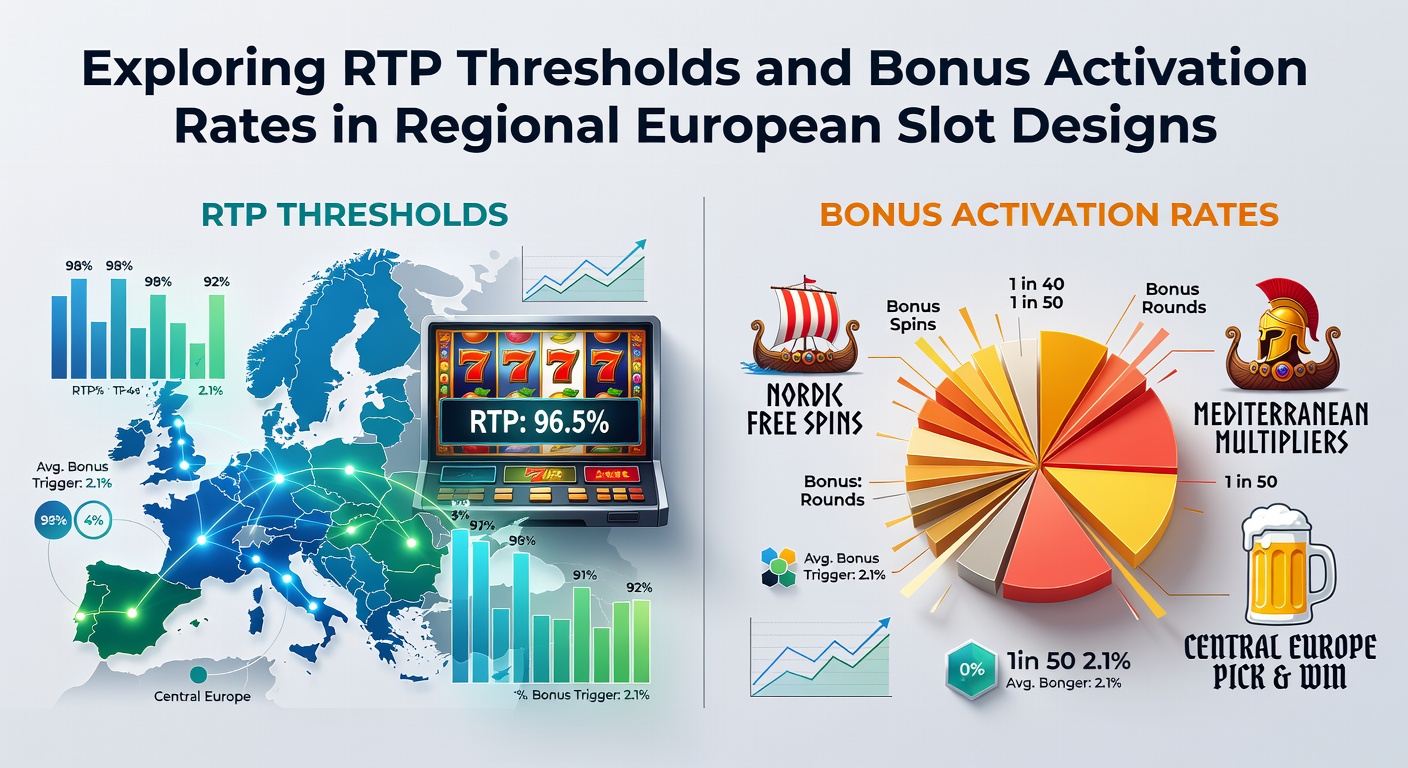
Exploring RTP Thresholds and Bonus Activation Rates in Regional European Slot Designs
Slot machines across Europe display distinct patterns in RTP thresholds that reflect local regulations and player preferences, with bonus activation rates varying by country and studio approach. Data from regulatory filings shows average RTP figures often sit between 94 and 97 percent in licensed markets, yet these numbers shift based on game type and regional rules that came into sharper focus by June 2026.
Defining RTP Thresholds in Licensed Markets
Return to player percentages represent the theoretical amount returned to players over extended play cycles, and European operators must publish these figures under licensing conditions enforced by bodies such as the Spelinspektionen in Sweden and the Dutch Kansspelautoriteit. Thresholds typically require minimums around 92 percent in several jurisdictions, while many popular titles operate above 95 percent to meet market competition; studies compiled by the European Gaming and Betting Association indicate that titles with RTPs exceeding 96 percent tend to sustain longer session times in monitored data sets.
Regional designs incorporate these thresholds differently, with Nordic studios favoring steady payout structures that align closely with higher RTP bands, whereas Mediterranean developers often build lower base RTPs offset by frequent feature triggers that adjust overall returns through bonus mechanics.
Regional Design Influences on Payout Structures
German and Austrian markets enforce stricter RTP reporting under updated 2025 framework adjustments that carried into 2026, requiring transparent disclosure of both base game and bonus contributions. Observers note that Central European slots frequently set RTP thresholds near 95.5 percent, with activation rates for free spin rounds documented at approximately 1 in 120 spins according to aggregated operator reports. In contrast, Southern European designs from studios in Spain and Italy integrate cultural motifs that influence reel layouts, where bonus rounds activate at rates closer to 1 in 95 spins while maintaining RTP levels around 94.8 percent to comply with local caps.
Eastern European operators, particularly those licensed in Romania and Poland, show patterns where RTP thresholds hover between 94 and 96 percent, yet bonus activation relies more heavily on scatter symbols that trigger at documented intervals of 1 in 110 spins in publicly available game audits. These variations stem from differing technical standards rather than any single regulatory preference, as each authority publishes its own certification requirements through annual compliance summaries.
Bonus Activation Rates Across European Studios
Bonus features in regional slots activate through predefined mathematical models that balance RTP distribution between base game returns and feature payouts. Research from industry testing labs reveals that Central European titles often program bonus triggers to occur between 1 in 80 and 1 in 150 spins depending on volatility settings, with higher activation correlating to slightly reduced base RTP portions. Northern studios meanwhile calibrate activation closer to 1 in 100 spins on average, allowing for elevated RTP thresholds that remain stable across thousands of game cycles.
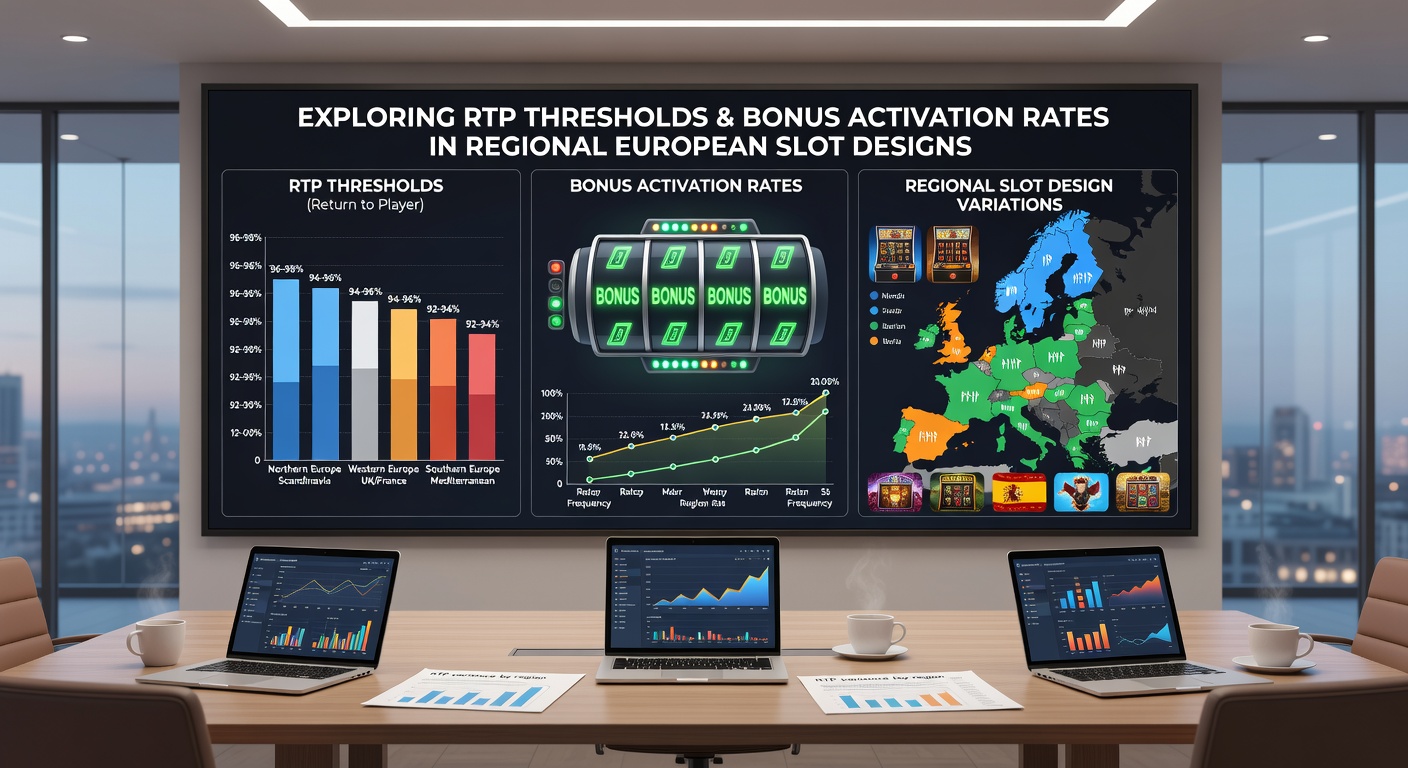
June 2026 compliance updates from multiple licensing bodies highlighted increased scrutiny on how bonus contributions factor into overall RTP calculations, prompting several developers to publish revised technical sheets that separate base game RTP from feature RTP allocations. Those adjustments produced measurable shifts in activation rates for select titles, with some Mediterranean designs moving from 1 in 95 to 1 in 105 spins while preserving the same combined RTP figure.
Regulatory Developments Shaping 2026 Trends
European authorities continued harmonizing certain technical standards throughout the first half of 2026, although full alignment remains distant. A collaborative report issued by the European Commission gaming working group noted that RTP disclosure rules now require clearer segmentation of bonus contributions in six member states, resulting in more granular player information across digital platforms. These changes influenced studio decisions on threshold placement, with many opting to maintain existing RTP bands while fine-tuning bonus frequencies to satisfy updated audit protocols.
Operators in smaller markets such as Belgium and Portugal adopted similar transparency measures earlier in the year, leading to documented adjustments where bonus activation rates increased modestly in newly certified releases to offset minor RTP reallocations. Data aggregated from certification labs shows these tweaks occurred without altering headline RTP percentages advertised to players.
Conclusion
Regional European slot designs continue to demonstrate measurable differences in RTP thresholds and bonus activation rates driven by local licensing conditions and studio methodologies. Figures compiled through June 2026 indicate stable ranges across markets, with activation frequencies adapting to maintain compliance while preserving overall return structures. Continued monitoring by regulatory bodies will likely produce further refinements in how these metrics are calculated and presented.